Acetylcholine.
This chemical carries the nerve's message across the gap to the muscle.
EPISODE 01 / BOTULISM
She can hear everything. She cannot move. A fictional story opens a window into the microscopic conversation between a nerve and a muscle.
VIDEO PILOT IN PRODUCTION · COMPANION LESSON AVAILABLE

THE SCIENCE BEHIND THE STORY
Muscles receive chemical messages from nerves across a small gap called the neuromuscular junction. Explore the simplified diagram to see normal signaling and how botulinum toxin interrupts it.
A nerve impulse reaches the nerve ending. Acetylcholine is released into the small gap and activates receptors on the muscle, helping it contract.
Mechanism reference: CDC clinical guidelines, 2021 ↗. This is a conceptual illustration; anatomy and distances are simplified.
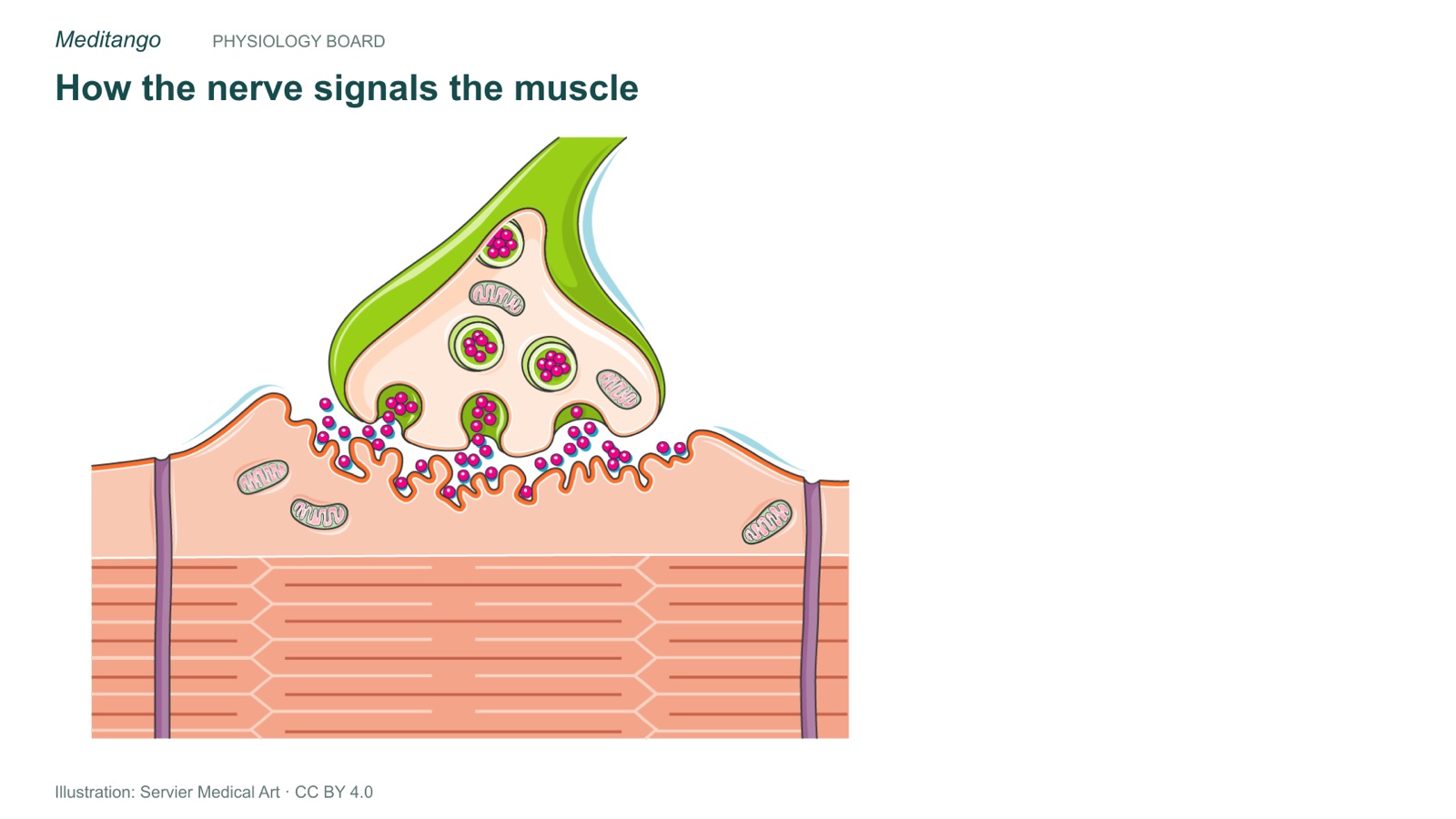
This chemical carries the nerve's message across the gap to the muscle.
Botulinum toxin inhibits the release of acetylcholine at the nerve ending, weakening muscle activation.
Antitoxin acts on circulating toxin to limit further harm. It does not reverse paralysis that has already developed.
MAKE THE CONNECTION
A quick check of the mechanism. Choose an answer to see the explanation.
QUESTION 01 / THE SIGNAL
Choose an answer above.
QUESTION 02 / THE TREATMENT
Choose an answer above.
FOLLOW THE REFERENCES
These references support the mechanism in this companion and provide context for the pilot. They do not document Samantha's fictional story.
Companion edition: 7 October 2026.
Primary reference for the nerve-to-muscle mechanism and the distinction between limiting further harm and reversing existing paralysis.
WORLD HEALTH ORGANIZATIONBotulism fact sheetGeneral background on botulism, its forms, and its effects.
ECDC · 2023Iatrogenic botulism: update on cases in EuropeOutbreak context included in the pilot's source material.
The video pilot is still in production. The companion lesson above is available now.
Back to the studio